
Start here
The 44-Bottleneck Checklist
$17 one-time
Forty-four bottlenecks across seven revenue layers as a printable diagnostic. Eleven pages. The whole method on paper, without the tooling.
A 44-point diagnostic across seven revenue layers, and eight repair engines behind it. Built for the operators and consultants who have to fix the thing, not just name it.
Revenue does not usually break in one place. It leaks in several at once, and the loudest symptom is rarely the constraint. A sales problem turns out to be an onboarding problem; a churn problem turns out to be pricing.
This scores 44 specific bottlenecks across seven layers, ranks what to deal with first, and hands off to a repair engine for each layer. It runs in the browser. Your figures stay on your machine.
Consultants licensed for client work print the whole thing under their own firm name.
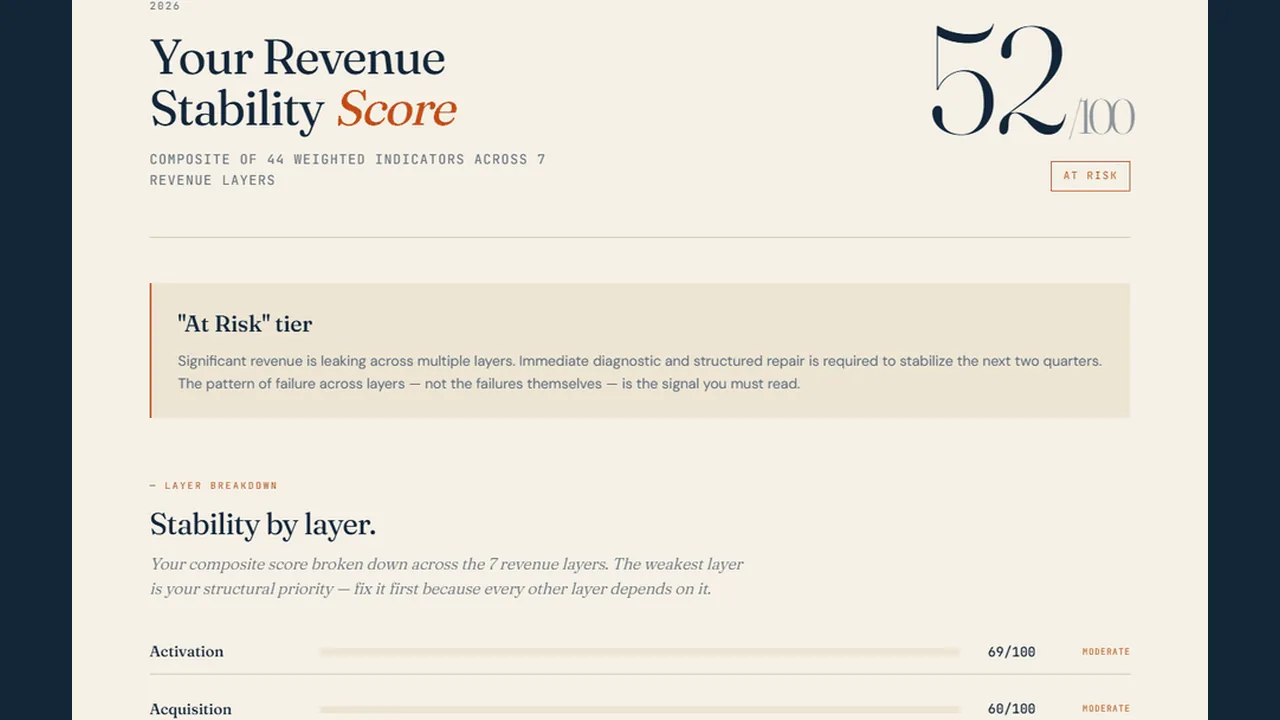
Northwind Analytics is fictional. It scores 52 out of 100, lands in the At Risk tier, and its weakest layer is Expansion. The recording takes it through the 44-point diagnostic, then into two of the eight repair engines, on the real tools rather than a mockup.
If you would rather see the shape of the whole thing first, the licence manifest lists every engine, every manual and every delivery template, mapped to the layer it repairs.
 ▶
▶
The recording shows the instrument running. This is what came out of it, and why the obvious move was the wrong one — the judgement is the part the score exists to produce.
The pair worth sitting with is NRR at 108% beside logo churn at 13%. Both are true at once: a few expanding accounts carry the revenue line while the account count quietly falls. That is why growth felt more expensive every quarter without any single number looking alarming.
Chosen: Retention, starting week one. The C-06 churn intervention ranked first not because retention scored worst — it did not — but because every other repair compounds against it. Fixing retention makes expansion worth doing, shortens payback without touching acquisition, and is the only one of the three whose gain is not erased by the others being left alone.
Northwind Analytics is fictional and exists to show the workflow. Every figure is calculated from numbers someone typed in; exposure is shown as a range carried at an assumed multiple. Nothing here is a measured loss.
Every tier contains the one below it. Start where your work is, and upgrade when the client engagements arrive rather than before.
Forty-four bottlenecks across seven revenue layers as a printable diagnostic. Eleven pages. The whole method on paper, without the tooling.
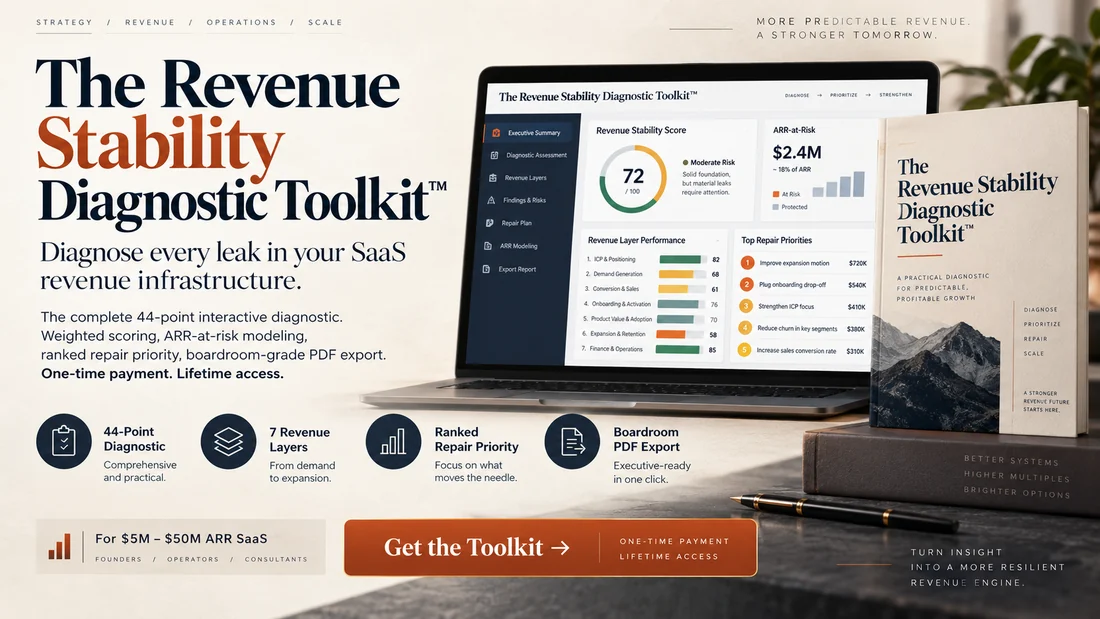
The scored diagnostic tool itself, with a methodology brief, a facilitation guide and a quick start. Five files. Run it on your own company as often as you like.
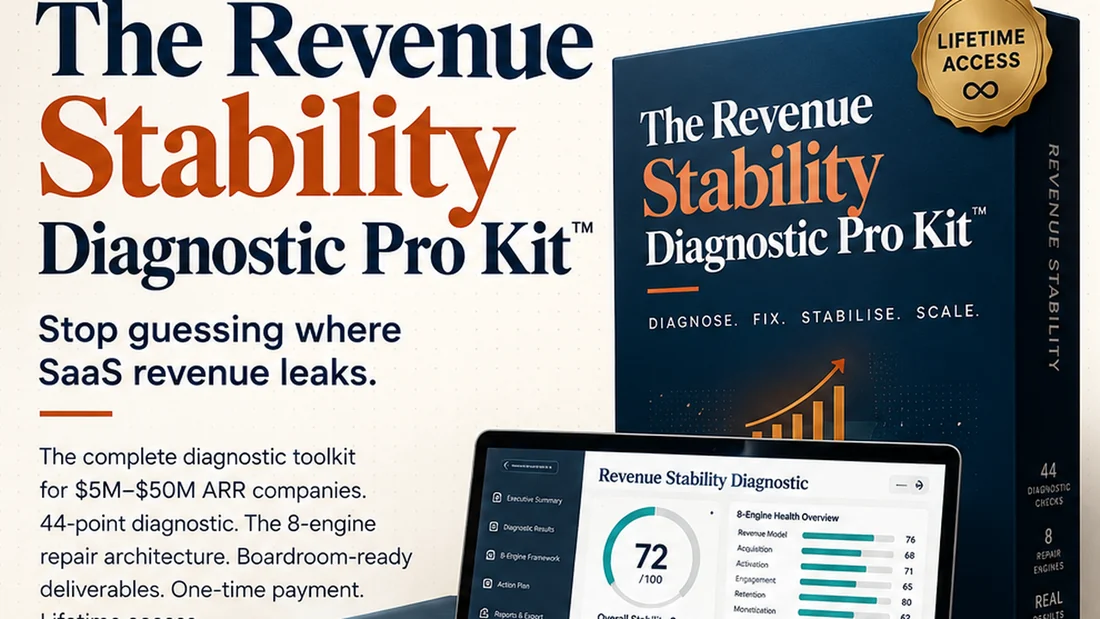
Everything in the Toolkit, plus the boardroom deck, the client delivery templates, and the right to use the methodology in paid client engagements. Fourteen files.

The whole stack, including all eight repair engines and their manuals, white-label rights across every asset, and one delivering consultant. Renews at $797.60 while the licence stays continuous.

The same rights with no annual expiry and nothing to renew. Founding price; the standard rate is $3,497. Past three years it costs less than renewing.

One more delivering consultant on an existing Commercial License. Charged once and carried through every renewal at no further seat fee. Requires a current licence.
The tiers stack, and each upgrade credits what you already paid. There is no advantage to buying ahead of the engagements.
Take the Checklist. Seventeen dollars, eleven pages, no tooling. It is the whole diagnostic on paper.
Take the Toolkit. The scored tool with its methodology brief and facilitation guide, run as often as you like on one business.
Take the Pro Kit. It adds the delivery templates, the board deck, and the right to charge for the work.
Take a Commercial License. Eight repair engines, white-label rights, and seats for your team.
The free Quick Scan runs ten of the forty-four checks and gives you a Revenue Stability Score with your three highest-priority leaks. It takes about four minutes.
Run the free scan